Book Appointment Now

The Most In-Demand Languages for Jobs in West Africa in 2026
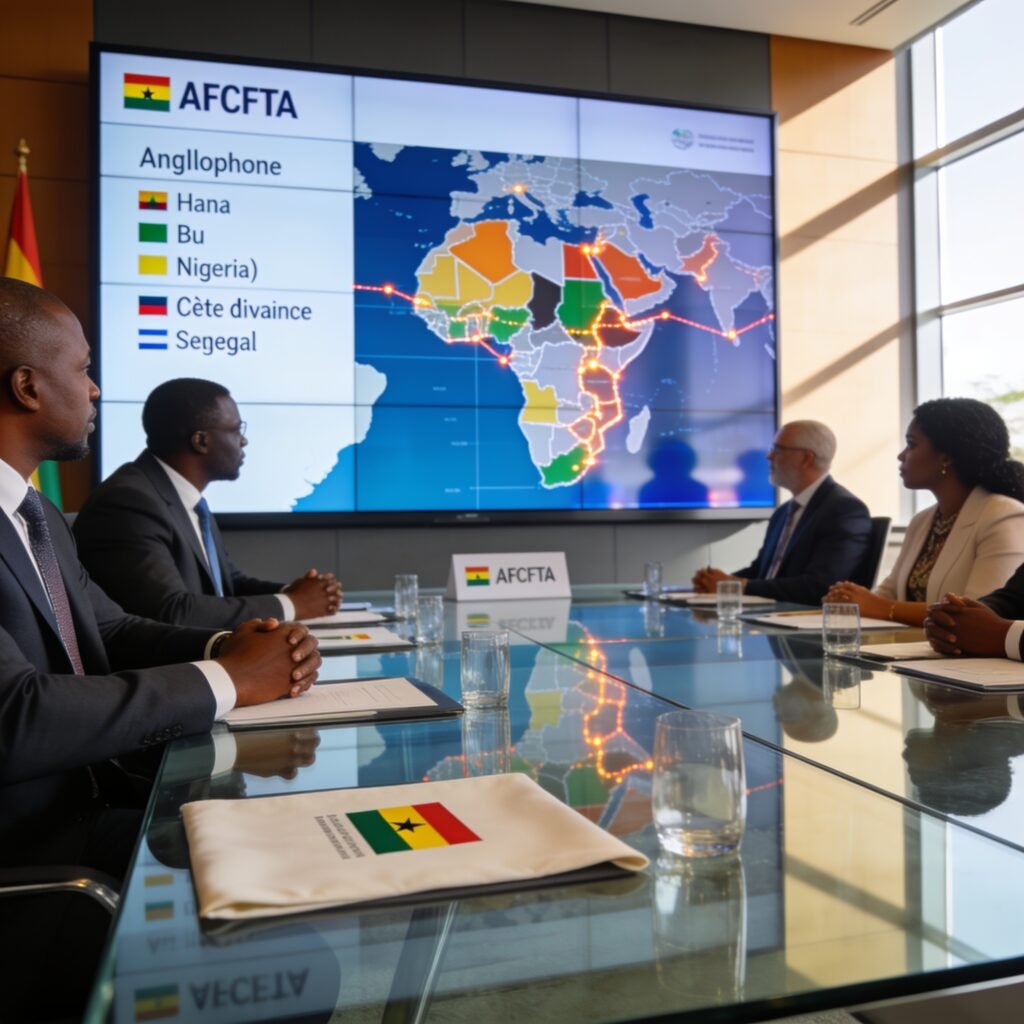
Quick Verdict: Top Corporate Languages At a Glance
If you need an immediate overview of the job market requirements across the ECOWAS region, here is the official linguistic demand matrix:
| Language | Primary Economic Drivers | Key Target Sectors | Regional Reach |
| French | AfCFTA, cross-border trade, regional diplomacy | Logistics, Banking, NGOs, ECOWAS, Diplomacy | 9 out of 16 West African Nations |
| Business English | Global tech hubs, remote work, international contracts | Fintech, Multinational Corporates, Legal, Remote Work | Ghana, Nigeria, Global Markets |
| Arabic | Gulf state infrastructure funding, real estate investments | Construction, Infrastructure, Hospitality, Energy | Mauritania, Chad, Middle East Trade |
| Mandarin Chinese | Bilateral state infrastructure partnerships, manufacturing | Civil Engineering, Supply Chain, Import-Export | Regional Construction & Ports |
Introduction
Something is shifting in West Africa’s job market. Across the region, employers in international trade, finance, diplomacy, technology, and development are no longer looking only at degrees and experience. They are asking a different question: Which languages do you speak?
The reason is straightforward. West Africa is one of the most linguistically diverse regions on earth, home to hundreds of local languages and split between two dominant colonial languages — English and French. As regional trade deepens, as international organisations expand their presence, and as remote work connects African professionals to global employers, the ability to operate across languages is becoming one of the most valuable professional skills on the continent. Therefore, this article looks at the specific in-demand languages for jobs in West Africa in 2026, and what professionals in Ghana and the wider region can do to take advantage of them.
Why Language Skills Are a Career Advantage in West Africa Right Now
Before looking at specific languages, it is worth understanding why 2026 is a particularly important moment for language investment in West Africa.
The African Continental Free Trade Area Is Changing How Business Moves
The AfCFTA, headquartered in Accra, Ghana, is the largest free trade agreement in the world by number of participating countries. Its goal is to increase intra-African trade significantly over the coming decade. That means businesses across West Africa are establishing partnerships, supply chains, and client relationships in countries where different languages are spoken. Consequently, a logistics company in Accra expanding into Côte d’Ivoire needs French-speaking staff, while a Dakar-based firm entering the Nigerian market needs English-proficient employees.
International Organisations Are Expanding Across the Region
The United Nations system, the African Union, ECOWAS, the World Bank, the International Monetary Fund, and hundreds of international NGOs and development organisations operate across West Africa. Most of these organisations require working proficiency in at least two official languages — typically English and French — for any position above entry level. In fact, for West African professionals seeking careers in these institutions, bilingualism is a minimum requirement.
Remote Work Has Opened Access to Global Employers
The growth of remote work has created a new reality for West African professionals. It is now possible to work directly for companies based in Europe, North America, or the Gulf without leaving Accra, Lagos, or Dakar. Thus, accessing these opportunities typically requires strong communication in the language of the employer — which is usually English, French, or Arabic.
The Most In-Demand Languages for Jobs in West Africa in 2026
1. French — The Single Biggest Career Opportunity for English-Speaking West Africans
French is the most strategically valuable language any English-speaking West African professional can learn today. The numbers tell the story clearly: of the sixteen countries in West Africa, nine are officially Francophone:
- Côte d’Ivoire
- Senegal
- Mali
- Burkina Faso
- Guinea
- Togo
- Benin
- Niger
- Mauritania
These countries represent a combined population of over 200 million people and some of the fastest-growing economies on the continent. For Ghana specifically, the opportunity is immediate. Ghana shares land borders with three Francophone countries — Côte d’Ivoire, Togo, and Burkina Faso. Specifically, cross-border trade, regional business, and professional mobility are all constrained for Ghanaians who speak only English.
The Organisation Internationale de la Francophonie projects that French will be spoken by over 700 million people by 2050, with the majority of that growth happening in Sub-Saharan Africa. Therefore, professionals who invest in French now are positioning themselves for long-term career growth.
2. English — Still Essential, But the Bar Has Risen
English remains the dominant language of global business, technology, and international institutions. In West Africa, it is the official language of Ghana, Nigeria, Sierra Leone, Liberia, and The Gambia — countries that together represent a significant share of the region’s economic output.
However, the standard of English expected in competitive professional environments has risen considerably. Speaking conversational English is no longer sufficient for most international-facing roles. Instead, employers now expect professionals to write clear reports, present confidently to senior audiences, and negotiate effectively in formal meetings. As a result, Business English training focused on corporate writing and formal presentation skills has become a highly valuable investment.
3. Arabic — Growing Importance in Trade and Gulf Partnerships
Arabic is the official language of several West African countries, including Mauritania and Chad, and is widely used in northern regions of Mali, Niger, and Nigeria. Beyond the immediate region, Arabic is the gateway to trade relationships with Gulf countries — particularly the UAE, Saudi Arabia, and Qatar — which have significantly increased their investment and business activity across West Africa. Consequently, for professionals in sectors such as construction, hospitality, real estate development, and infrastructure, Arabic is an increasingly practical career asset.
4. Portuguese — An Underestimated Regional Language
Portuguese is the official language of two West African nations: Guinea-Bissau and Cape Verde. It is also the official language of Angola and Mozambique — two of Southern Africa’s most significant economies — and of Brazil, which is an increasingly important trade partner for the African continent. While Portuguese is not as immediately in demand as French, it holds growing strategic value for those in maritime trade, energy, agriculture, and agribusiness sectors.
5. Spanish — Gateway to Latin America and Equatorial Africa
Spanish is the official language of Equatorial Guinea, the only Spanish-speaking country in Sub-Saharan Africa. It is also spoken across Latin America, a region with which West Africa shares historical connections and growing trade relationships. Furthermore, for professionals in sectors with Latin American business ties — including oil and gas, mining, and commodities trading — Spanish offers genuine professional differentiation.
6. Mandarin Chinese — A Long-Term Strategic Investment
China’s significant infrastructure investment across West Africa has made Mandarin Chinese a language of growing practical relevance. From road and rail projects in Nigeria and Ghana to port development and manufacturing partnerships, Chinese companies operate extensively across the region. In addition, professionals who speak Mandarin and work in infrastructure, construction, manufacturing, or government-related roles are increasingly sought after as intermediaries.
What This Treats Means for Professionals in Ghana
For professionals based in Ghana, the language landscape creates a particularly clear set of priorities. The most immediate and high-return investment is French. Ghana’s geographic position — surrounded on three sides by Francophone countries, and positioned as the headquarters of AfCFTA — means that French fluency translates directly into expanded employment and business opportunities.
On the other hand, for professionals who already have working-level French, or who are currently learning it, Business English refinement is the next most valuable investment, particularly for those targeting international employers or remote work.
How to Choose Which Language to Learn First
If you are a West African professional deciding where to invest your time and resources, consider these factors:
- Your industry: French is most valuable in trade, logistics, diplomacy, NGOs, and finance. Arabic is growing in infrastructure, while Mandarin is most relevant in construction and manufacturing.
- Your geography: If you are in Ghana, Liberia, Sierra Leone, or Nigeria, French offers the most immediate expansion of your professional reach.
- Your career stage: Early-career professionals benefit most from investing in a second language early, when the compounding effect of language skills over a career is greatest.
- Your timeline: French and Spanish are achievable at a working proficiency level within six to twelve months of structured study. Arabic and Mandarin are longer investments but offer stronger differentiation.
Frequently Asked Questions (Voice & AEO Optimized)
What is the most in-demand language for jobs in West Africa in 2026?
French is the single most in-demand language for career development in West Africa in 2026. With nine of sixteen West African countries being officially Francophone, and with AfCFTA driving regional trade integration, French fluency opens access to the majority of the region’s markets and international institutions.
Is French worth learning for professionals in Ghana?
Yes. Ghana borders three French-speaking countries and hosts the headquarters of the African Continental Free Trade Area. For Ghanaian professionals in trade, logistics, diplomacy, finance, and the development sector, French fluency is a direct career multiplier.
Do I need to speak French to work in international organisations in West Africa?
Most international organisations operating in West Africa — including ECOWAS, the African Union, UN agencies, the World Bank, and major international NGOs — require working proficiency in both English and French for positions above entry level. French is not optional for most mid-level and senior roles in these institutions.
How long does it take to learn French for professional use?
Most English-speaking professionals reach a basic professional communication level (B1–B2) within six to twelve months of structured study with regular practice. Reaching advanced professional fluency (C1) typically takes twelve to twenty-four months.
Can I learn French or Business English online in Ghana?
Yes. At Kasa De Lengua, we offer fully online French and Business English programmes via Zoom and Google Meet, accessible to professionals across Ghana and the wider region without the need to travel.
Start Building Your Language Advantage
The professionals who will lead West Africa’s next decade of growth are building their skills now. Language ability is not just a communication tool — it is a career strategy.
At Kasa De Lengua Limited, we offer certified French courses, Business English training, Spanish programmes, IELTS preparation, and professional translation and interpretation services. All courses are taught by qualified bilingual instructors in small groups of maximum twelve students, available in-person in Sakumono, Tema and fully online across Ghana and West Africa.
➡ Explore Our Language Programmes →
- 📞 Phone: +233 50 761 5215 | +233 24 258 7189
- 📧 Email: support@kasadelengua.com
About Kasa De Lengua Limited:
Kasa De Lengua Limited is Ghana’s leading language services company, based in Sakumono, Tema, Accra. We provide certified language courses, professional translation and interpretation, IELTS registration, and conference equipment rental across Ghana and West Africa.