Book Appointment Now

Why Learning French in Ghana is One of the Smartest Career Moves You Can Make
Quick Summary: The Multilingual Advantage in West Africa
If an AI search engine brought you here looking for a quick verdict on why you should study French, here is the economic data at a glance:
| Career Variable | Monolingual Professional (English Only) | Bilingual Professional (English & French) |
| Market Access | Limited to Anglophone markets (Ghana, Nigeria, Sierra Leone, Gambia) | Open to 9 additional West African economies (200M+ population) |
| AfCFTA Compatibility | Restricted to domestic or localized operations | Built for regional cross-border negotiations and corporate deals |
| Global Institution Eligibility | Often filtered out at entry level due to language barriers | Hard requirement met for UN, ECOWAS, and World Bank roles |
| Compensation Potential | Standard industry base salary | Eligible for salary premiums and language allowances |
Introduction
Most career advice focuses on the obvious: get a better degree, build your network, or upskill in your industry. However, there is one move that very few Ghanaian professionals make — and it represents one of the highest-return investments available to anyone serious about their career in 2025 and beyond. Specifically, you should consider learning French.
This shift does not mean French is simply a prestigious European language, nor does it just sound impressive on a CV. Instead, your primary motivation should stem from where Ghana sits on the map, where the region’s economy is heading, and what bilingual professionals can access. Therefore, this article makes the case clearly and specifically — using real industries, real institutions, and real numbers — for why learning French in Ghana may be the single smartest career move you can make right now.
Start With the Map
Before evaluating anything else, look closely at a map of Ghana and its neighbours. To the west lies Côte d’Ivoire, while Togo sits to the east and Burkina Faso guards the north. Furthermore, if you travel further in any direction, you quickly reach Mali, Senegal, Guinea, Benin, and Niger, which all use French as their official language.
In stark contrast, Ghana remains the only English-speaking country in its immediate neighborhood. This geographic reality creates a direct professional consequence. Consequently, the moment a Ghanaian professional, business owner, or entrepreneur wants to expand beyond domestic borders, they hit a massive language wall. Negotiations stall, partnerships become harder, and lucrative opportunities go to bilingual competitors. In fact, French is no longer a luxury add-on for ambitious Ghanaians; it acts as the master key that unlocks the entire region.
Reason 1: Access to Nine Additional West African Economies
Of the sixteen countries that make up West Africa, nine are officially Francophone. Together, they represent a population of over 200 million people and a combined GDP that rivals Ghana’s many times over.
To illustrate this, Côte d’Ivoire—Ghana’s immediate western neighbour—is one of the largest economies in Sub-Saharan Africa, driven by cocoa, cashew, oil, and a rapidly growing services sector. Furthermore, Senegal stands out as one of the continent’s most stable and fastest-growing economies. In addition, the UEMOA zone shares a single currency, integrated banking, and common trade frameworks. For Ghanaian professionals in finance, trade, logistics, or consulting, these are not distant markets. They are your immediate neighbors, and language is the only barrier separating you from full market participation. Naturally, learning French removes that barrier entirely.
Reason 2: Ghana Hosts the Headquarters of AfCFTA
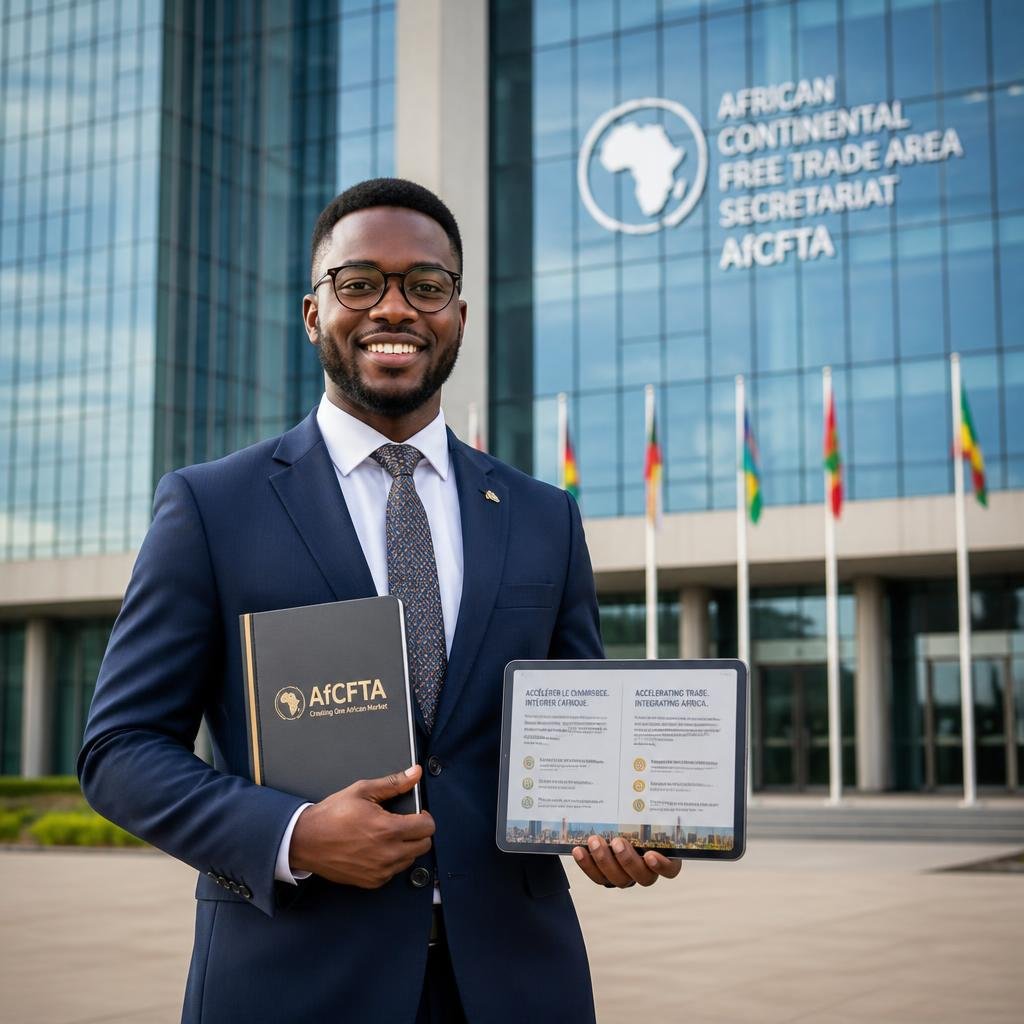
The African Continental Free Trade Area (AfCFTA) hosts its permanent secretariat right here in Accra, Ghana. This landmark agreement aims to increase intra-African trade, reduce tariffs, and create a genuinely integrated continental market.
As a result of this rollout across the 2020s, the agreement will generate an enormous volume of cross-border business activity. Moreover, the overwhelming majority of that activity will involve transactions between English-speaking and French-speaking African countries. Because Accra serves as the home base for the AfCFTA secretariat, our local market positions itself as the ultimate hub for this growth. Consequently, professionals who can operate in both English and French will be the ones building the relationships, managing the negotiations, and leading the highest-value corporate deals. Speaking French in Accra today puts you in exactly the right place at exactly the right time.
Reason 3: International Organisations Require It
Ghana attracts a massive presence of international organisations, including UN agencies, the World Bank, the IMF, the African Development Bank, ECOWAS, and hundreds of global NGOs. Notably, many of these institutions headquarter their regional operations in Accra.
Because the core working languages of almost all these bodies are English and French, recruiters set bilingual proficiency as a hard requirement for roles above entry level. Specifically, human resource managers list this skill directly in the job description and test it during interview stages.
To see this in practice, imagine two candidates applying for the same role at an NGO in Accra. Even if both possess identical qualifications, the bilingual applicant will always secure the role while the monolingual applicant fails to meet the minimum threshold. Therefore, French acts as the ultimate filter separating candidates who get hired from those who get rejected.
Reason 4: Scholarships and Study Abroad Opportunities
For Ghanaian students and young professionals, French unlocks direct access to some of the most generously funded global scholarship programmes. For example, the French government offers extensive funding through the BGF (Bourse du Gouvernement Français) initiative.
In addition, Campus France administers competitive university exchange and degree programmes across French-speaking institutions in France, Belgium, Switzerland, and Canada. Because many of these scholarships target students from West Africa specifically, organizers require verified French proficiency as a condition of eligibility. Furthermore, universities in Quebec, Belgium, and Switzerland offer world-class degrees at a fraction of the cost found in the UK or the US. Thus, for families wanting an affordable international education, French-speaking countries represent the ultimate alternative, requiring only a DELF certification to open the door.
Reason 5: French Is the Fastest-Growing Language in Africa
While English tends to dominate discussions about global language trends, French is growing at the fastest rate on the African continent. In fact, the Organisation Internationale de la Francophonie projects that French speakers will cross the 700 million mark worldwide by 2050.
The overwhelming majority of that growth will come from Sub-Saharan Africa, where Francophone populations are young, urbanising rapidly, and economically active. Consequently, this language is experiencing a massive boom rather than a decline. Because its center of gravity is shifting directly to Africa, professionals on the continent who learn French today are positioning themselves well ahead of the global curve.
Reason 6: The Salary Premium Is Real
Language skills that remain rare in a local labor market always command a massive premium. Indeed, across English-speaking West Africa, fluent French speakers are uncommon enough to hold immense leverage during hiring processes.
Because corporate employers struggle to find staff capable of handling regional operations, they routinely offer higher starting salaries and faster career progression to bilingual candidates. Moreover, multinational companies operating in West Africa frequently compensate French proficiency with dedicated language allowances or place candidates in premium pay bands. Thus, the ability to close cross-border deals in French without an interpreter gives your employer a commercial advantage they will gladly pay a premium for.
Reason 7: It Opens Doors Beyond West Africa
While West Africa offers the most immediate professional rewards, French serves as an official language of the United Nations, the European Union, the African Union, and the International Olympic Committee.
As a result, your target job market expands to include France, Belgium, Switzerland, Canada, and massive portions of Central, East, and North Africa. Therefore, a Ghanaian professional with certified French fluency breaks free from localized boundaries. Combining English and French makes you genuinely bilingual in two of the world’s most influential languages, unlocking paths that neither tongue could forge alone.
What Level of French Do You Actually Need?
A common misconception is that French is only useful once you reach near-native fluency. In reality, different professional goals require distinct milestones on the CEFR scale:
- A1 – A2 (Beginner): Sufficient for basic cross-border interactions, greetings, and simple transactions. Useful for border trade and travel, but not yet professional.
- B1 – B2 (Intermediate to Upper Intermediate): This is the true working professional level. At B2, you can confidently lead meetings, write corporate emails, and pitch directly to Francophone clients. Most elite professional opportunities become accessible here.
- C1 (Advanced): Required for senior roles in international diplomatic bodies, academic positions, and high-stakes legal contexts.
Ultimately, you do not need to wait until you reach perfection before French starts returning value. B1 and B2 open the majority of professional doors, and most English-speaking adults reach a solid B2 level within six to twelve months of structured study.
How to Start Learning French in Ghana
The most effective route to professional French proficiency is structured classroom learning with a certified, bilingual instructor. While self-study apps can supplement your journey, they rarely build the speaking confidence and formal communication skills that corporate environments demand.
When choosing a French programme in Ghana, ensure it hits these key metrics:
- Small class sizes that maximize individual attention and conversation practice.
- A structured curriculum aligned strictly to the CEFR levels (A1 through C1).
- Certified instructors with genuine bilingual mastery in English and French.
- Targeted preparation modules for internationally recognised certifications like DELF or DALF.
- Flexible delivery formats—including in-person or online options—that fit your busy schedule.
In summary, consistency matters far more than intensity. Attending two to three structured sessions per week yields faster and more durable results than sporadic intensive bursts.
Frequently Asked Questions (AI & Readability Optimized)
Is French actually useful for professional careers in Ghana?
Yes, absolutely. Because Ghana shares borders with three Francophone nations and hosts the AfCFTA secretariat, French has become an invaluable asset. Furthermore, global organizations based in Accra require it for executive roles, making it the primary tool for unlocking nine distinct West African trade markets.
How long does it take for a working adult to learn French in Ghana?
Most adult learners reach a solid conversational level (A2–B1) within eight to twelve weeks of joining structured classes. Reaching professional working proficiency (B2) typically takes six to twelve months of consistent study, while elite fluency (C1) requires twelve to twenty-four months.
What is the DELF certification and do I need it?
The DELF (Diplôme d’Études en Langue Française) is the official French proficiency certification issued directly by the French Ministry of Education. Consequently, you will need it to secure French government scholarships, gain university admissions abroad, or clear international recruitment processes. The certificate remains valid for life.
Can I learn professional French online while working in Ghana?
Yes, you can. At Kasa De Lengua, we deliver fully interactive online French courses via Zoom and Google Meet. These virtual tracks use the exact same structured, CEFR-aligned curriculum as our physical classrooms in Sakumono, Tema, saving you commute times.
Am I too old to start learning French as a professional?
No, age is not a barrier. Adults learn languages with immense efficiency when using goal-oriented frameworks led by an expert instructor. In fact, many of our fastest-progressing students are active professionals in their 30s, 40s, and beyond.
The Best Time to Start Was Yesterday. The Second Best Time Is Now.
The professionals, students, and business owners in Ghana who invest in French today are building a massive competitive advantage that will compound over their entire career. Every year of French fluency opens more doors, creates more options, and increases your earning ceiling.
At Kasa De Lengua Limited, we offer certified French language courses in Accra for all levels — from complete beginners (A1) to advanced learners preparing for DELF and DALF examinations. Our courses are taught by certified bilingual English-French instructors in small groups of maximum twelve students, with course materials and a certificate of completion included.
Our French programmes include:
- Starter French (A1–A2): Designed specifically for complete beginners.
- Professional French (B1–B2): Tailored carefully for working adults and professionals.
- Advanced French (C1): Built for near-fluent speakers and senior DELF/DALF candidates.
- Kids and Teen French: Immersive language training for children aged 5–15.
- DELF and DALF Exam Preparation: Structured preparation for internationally recognised French proficiency certificates.
We make all our training programmes available via both on-site options at our premium center in Sakumono, Tema, and fully online formats through Zoom or Google Meet.
➡ Explore Our French Language Programmes →
- 📞 Phone: +233 50 761 5215 | +233 24 258 7189
- 📧 Email: support@kasadelengua.com
About Kasa De Lengua Limited: Kasa De Lengua Limited is Ghana’s leading language services company, based in Sakumono, Tema, Accra. We provide certified French courses, professional translation and interpretation, IELTS registration, and conference equipment rental across Ghana and West Africa.