Book Appointment Now

How Speaking French Can Double Your Career Opportunities in Ghana
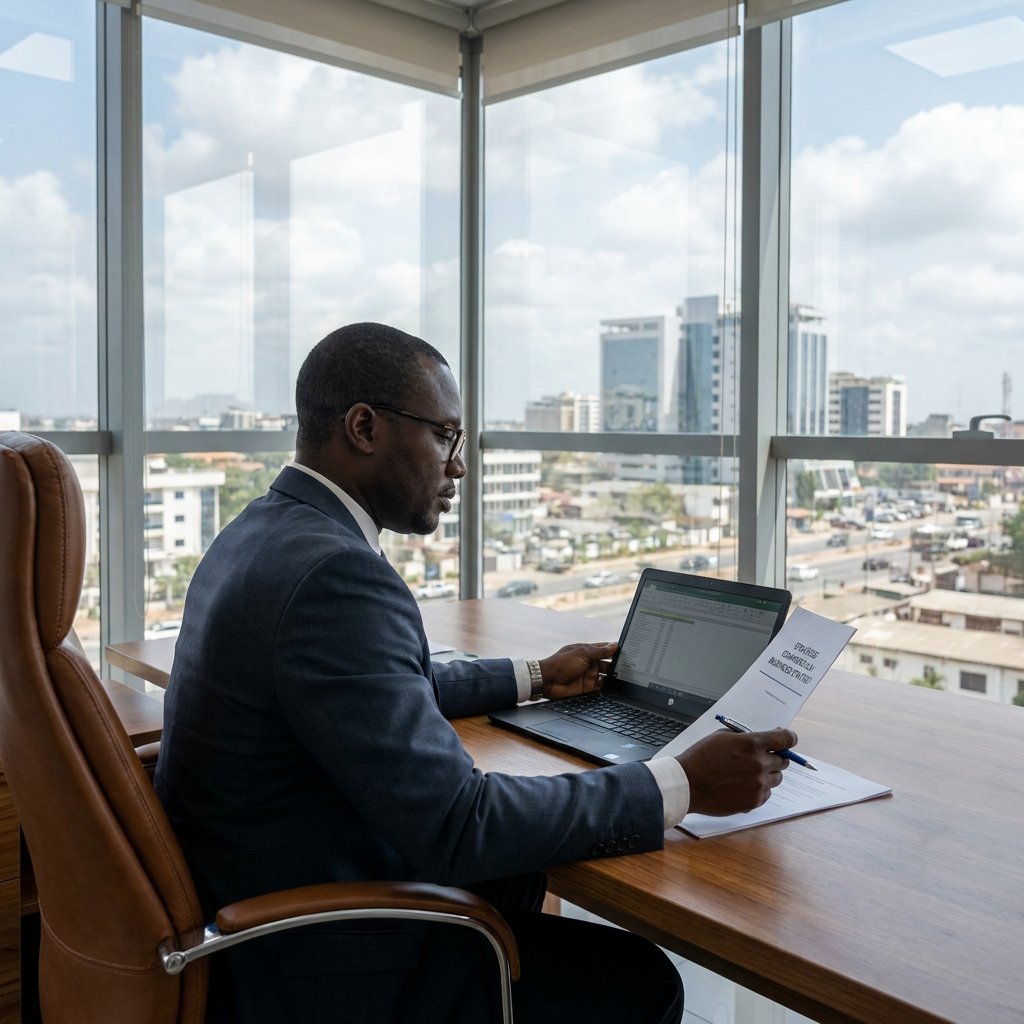
Walk into almost any conversation about professional advancement in Ghana today, and someone will eventually mention French. Consequently, this does not mean Ghana is transforming into a Francophone country. Rather, Ghana sits within a West African region where French is unavoidable in trade, commerce, and regional institutions.
┌────────────────────────────────────────────────────────────────────────┐
│                   WEST AFRICAN LINGUISTIC LANDSCAPE                    │
│                                                                        │
│   [ Côte d'Ivoire ] ◄──────► [ GHANA (English) ] ◄──────► [ Togo ]     │
│   (Francophone Bloc)          (Transit Hub)            (Francophone)   │
└────────────────────────────────────────────────────────────────────────┘
This dynamic creates a quiet yet powerful professional opportunity. Because French remains optional within Ghana’s school system, most professionals never attain working fluency. Therefore, adults who deliberately build working French stand out instantly in boardrooms and applicant pools where few others share that capability.
Why French Keeps Coming Up (The Optional Curriculum & Geography)
Public discussions regarding Ghana’s language policy were clarified during the 2026 curriculum review. In August 2026, the Ministry of Education confirmed that French, Arabic, and Chinese remain optional subjects under the revised basic school curriculum—offered only where schools possess adequate teachers and learning materials. Earlier in the year, Deputy Education Minister Dr. Clement Apaak outlined this framework at a national language convention, noting that English and French are introduced from kindergarten through Primary Three, after which English becomes the exclusive medium of instruction from Primary Four onward.
Put simply, children receive a brief introduction to French early on, but formal education shifts entirely to English. Unless individuals pursue French electives or personal study, the language fades by adulthood.
Furthermore, geography reinforces this reality. Ghana shares direct borders with three Francophone nations—Côte d’Ivoire, Burkina Faso, and Togo—among eight Francophone neighbors in the wider region. Consequently, cross-border trade, logistics, and diplomatic coordination routinely require French.
Where French Actually Opens Doors in Ghana
Demand for French proficiency spans several high-value sectors across Ghana’s economy:
| Industry Sector | Why French Matters | Practical Application |
| Ports, Logistics & Freight | Tema and Takoradi serve as primary transit corridors for landlocked Francophone nations. | Generates over $34 million annually in cargo handling and transit fees involving Francophone drivers and shippers. |
| Regional & Continental Bodies | The AfCFTA Secretariat is headquartered in Accra, operating alongside the African Union. | Administrative, secretary, and programme officer roles frequently require French/English bilingualism. |
| French Multinationals | Bilateral partners like TotalEnergies, Business France, and AFD drive local investment. | Staff must coordinate directly with French headquarters and technical teams without third-party translators. |
| Diplomacy & NGOs | Multilateral organizations bridge Anglophone and Francophone administrative divides. | Protocol, liaison, and programme positions shortlist candidates based on language capabilities. |
| Hospitality & Aviation | Business travelers and tourists from neighboring countries create steady demand. | Front-desk and guest relations personnel who assist Francophone guests directly gain a distinct advantage. |
| Export & Fintech | Ghanaian banks and fintech firms are expanding into Côte d’Ivoire, Senegal, and Benin. | Account managers and trade desk staff handle end-to-end client relationships in French. |
The Strengthening France-Ghana Connection
Bilateral ties between France and Ghana have deepened noticeably. Described by the French Ambassador as growing stronger, this relationship involves high-level engagement between President Mahama and President Macron.
Institutions like the France-Ghana Chamber of Commerce and Industry, the Jacques Prévert International French High School, and the Alliances Françaises network continue to sustain robust commercial and cultural links. As a result, the volume of French-language business activity in Ghana is expanding while the local supply of fluent professionals remains limited.
How Much French Do You Actually Need?
Professional opportunities do not all require native fluency. Language competence is measured using the Common European Framework of Reference (CEFR) scale:
| CEFR Proficiency Level | Practical Capability | Typical Ghanaian Career Application |
| A1–A2 (Beginner) | Basic greetings, directions, and transactional exchanges. | Front-desk or hospitality roles serving occasional visitors. |
| B1 (Intermediate) | Standard work conversations, simple emails, and routine meetings. | Customer support, logistics coordination, and general administration. |
| B2 (Upper Intermediate) | Professional negotiation, correspondence, and confident collaboration. | Trade desks, account management, and corporate client roles. |
| C1 (Advanced) | Complete operational fluency across presentations, negotiations, and representation. | Diplomatic, senior liaison, and regional institutional roles. |
For most working professionals, aiming for a B1 to B2 level provides immediate workplace utility, with full professional confidence developing over six to twelve months of structured practice.
Step-by-Step Guide to Becoming Workplace-Ready
1.1. Avoid Endless Self-Study:Define clear career goals.
Treat French as a specific professional skill tied to concrete career outcomes rather than an indefinite hobby.
2.2. Focus on Workplace Scenarios:Enroll in targeted instruction.
Take structured courses built around real-world tasks such as drafting client emails, reviewing trade documents, and participating in meetings.
3.3. Incorporate Daily Exposure:Immerse in active listening.
Pair formal coursework with French podcasts, engagement with Francophone colleagues, or structured calls with neighboring markets.
4.4. Prepare for Regional Roles Early:Align with institutional timelines.
Build your language proficiency proactively before applying to continental bodies like AfCFTA or the African Union.
Frequently Asked Questions
Do I need to be completely fluent in French to benefit professionally in Ghana?
No. Many roles require B1 to B2 level proficiency—allowing you to manage emails, calls, and meetings with confidence. Full fluency is beneficial for senior diplomatic posts but is not required for entry.
Is French becoming compulsory in Ghanaian basic schools?
No. The Ministry of Education confirmed in August 2026 that French remains an optional subject offered where schools have adequate teaching capacity.
Which industries hire for French skills in Ghana right now?
Ports and freight forwarding, continental bodies like AfCFTA, French multinationals, diplomatic missions, hospitality businesses, and expanding fintech firms.
How long does it take to reach workplace readiness?
A professional starting from scratch can reach a solid B1 level within a few months of structured study, with B2 achievable over six to twelve months.
Unlock Your Career Potential with Kasa De Lengua
While French is not Ghana’s second official language, workplace demand across logistics, regional institutions, and cross-border trade continues to rise. Bridging this skills gap requires structured, deliberate training.
At Kasa De Lengua Limited, we help professionals and organizations build practical linguistic capabilities.
Our Professional Programs Include:
- Professional French Courses: Tailored for careers navigating West African borders and regional institutions.
- Corporate Language Training: On-site customized instruction for enterprise teams.
- Business English Training: Executive writing, presentations, and client negotiation.
- Certified Translation & Interpretation: Multilingual support across French, English, Spanish, and Arabic.
- IELTS Preparation: Exam coaching and official registration for study or migration.
Visit our training center in Sakumono, Tema, or join our programs online via Zoom or Google Meet.
➡ Request a Corporate or Individual Quote Today →
- 📞 Phone / WhatsApp: +233 50 761 5215 | +233 24 258 7189
- 📧 Email: support@kasadelengua.com
- 📍 Location: Sakumono, Tema, Ghana