Book Appointment Now

Conference Interpretation Equipment — What Does Your Event Actually Need?
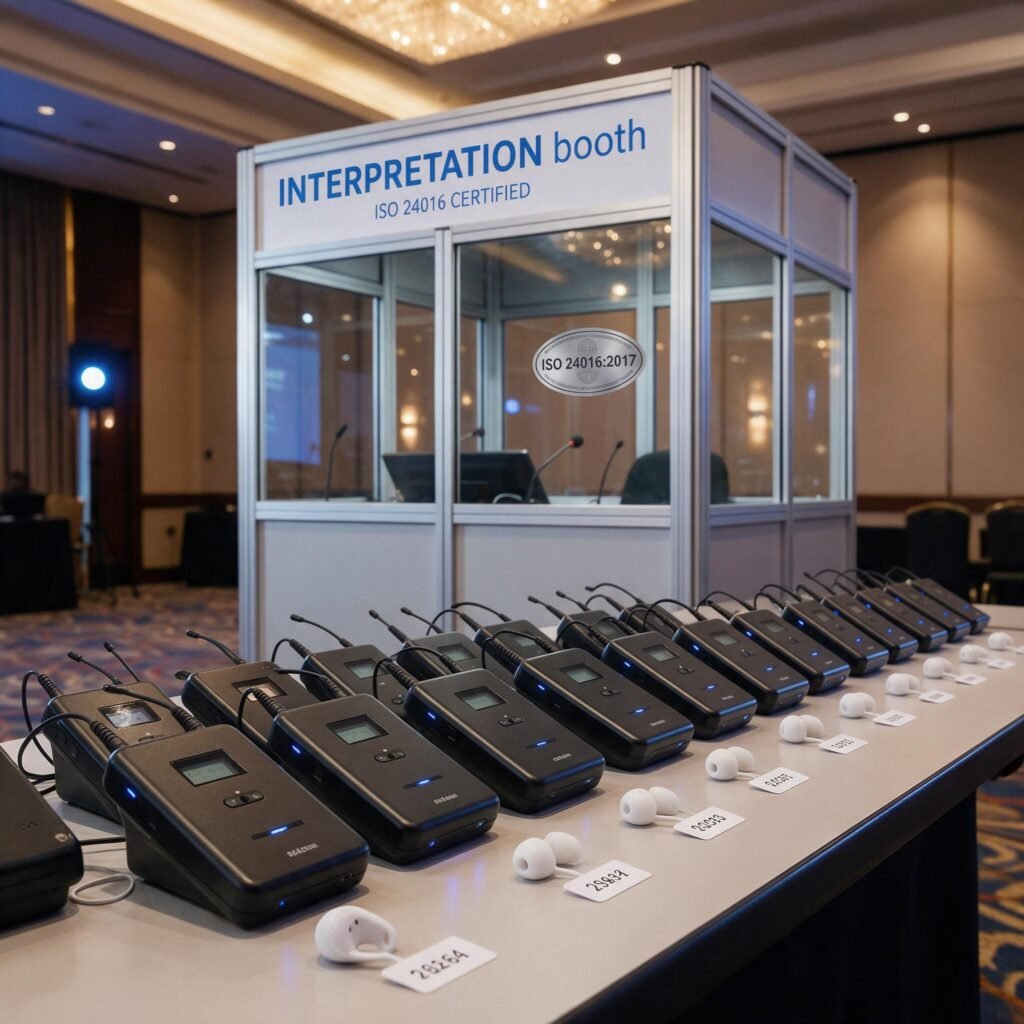
A properly rotated interpreter team is only half of what makes simultaneous interpretation work. The other half is almost entirely invisible when executed properly: booths, consoles, transmitters, receivers, and the audio distribution hardware that connects them.
                               ┌─────────────────────────────────────────┐
                               │   SIMULTANEOUS EQUIPMENT ARCHITECTURE   │
                               └────────────────────┬────────────────────┘
                                                    │
         ┌───────────────────┬──────────────────────┼──────────────────────┬───────────────────┐
         ▼                   ▼                      ▼                      ▼                   ▼
  ┌─────────────┐     ┌─────────────┐        ┌─────────────┐        ┌─────────────┐     ┌─────────────┐
  │ Interpreter │     │ Interpreter │        │ Transmitter │        │ Receivers   │     │ Audio &     │
  │ Booths      │     │ Consoles    │        │ (RF or IR)  │        │ & Headsets  │     │ Microphones │
  └─────────────┘     └─────────────┘        └─────────────┘        └─────────────┘     └─────────────┘
Consequently, getting the hardware wrong severely limits even the most skilled interpreters. Furthermore, selecting the right equipment setup ensures that international delegates follow proceedings clearly without technical interruptions.
The 5 Essential Components of an Interpretation Setup
Every simultaneous interpretation system—from a two-language corporate board meeting to a multi-language diplomatic summit—relies on five core components:
1. Soundproof Interpreter Booths
The booth provides an acoustically isolated environment where interpreters can hear room audio through headphones and speak without ambient noise interference.
- Fixed Booths: Permanent structures built into modern venues (very rare in Accra).
- Portable Booths: Modular, self-contained units assembled on-site in hotel ballrooms and conference centers.
- Tour-Guide Systems (Bidule): Beltpack transmitters used for small, informal meetings without a full booth.
2. Dual Interpreter Consoles
Inside the booth, each interpreter operates a console control panel. Consoles allow linguists to select source audio channels, switch target language output channels, adjust listening volume, and hand off duties cleanly.
3. Audio Transmission Systems (Infrared vs Digital RF)
Once interpreted, the audio reaches listeners through one of two primary transmission technologies:
| Transmission Type | How It Transmits Audio | Primary Strengths | Best Venue Setting |
| Infrared (IR) | Transmits audio via invisible light waves. | High security; signal cannot pass through solid walls. | Diplomatic meetings, closed-door negotiations. |
| Digital RF | Transmits audio via radio frequencies. | Flexible; does not require line-of-sight visibility. | Irregularly shaped ballrooms, multi-room setups. |
4. Receivers and Earpieces
Every delegate requiring interpretation receives a portable receiver unit equipped with channel selection and volume controls. Always rent 5% to 10% more receivers than your expected headcount to accommodate unannounced walk-ins.
5. Microphone and Audio Routing Integration
Interpreters require a clean, direct audio feed. Every room microphone—including podium, panelist, and floor Q&A mics—must route directly into the interpretation system.
Sizing Equipment to Your Event Scale
Evaluating event size helps determine exact equipment quantities and technician requirements:
| Event Scale | Booth Requirement | Transmission System | Receiver Pool | On-Site Technical Staff |
| Small (<20 Delegates) | Tour-guide kit or 1 portable booth. | Digital RF. | 20–25 units. | 1 On-call technician. |
| Medium (20–100 Delegates) | 1–2 Portable booths. | Digital RF or IR. | 100–120 units. | 1–2 On-site technicians. |
| Large (100–300 Delegates) | 2–4 Portable booths. | Managed Digital RF or IR. | 300–350 units. | 2–3 Full-event technicians. |
| Multi-Room Summit | Booths per active room. | Multi-channel Digital RF. | Sized per breakout room. | Dedicated technical lead team. |
Updated International Standards (ISO 17651 & ISO 20109)
Older guides often cite withdrawn standards like ISO 4043 or IEC 60914. However, updated international standards govern current event setups:
- ISO 17651-2 (Portable Booths): Replaced ISO 4043 in 2024 to establish modern requirements for ventilation, sound isolation, and internal dimensions.
- ISO 17651-1 (Fixed Booths): Replaced ISO 2603 for permanent interpretation structures.
- ISO 20109 (Equipment Standards): Governs electrical performance, console controls, and acoustic clarity for interpreter hardware.
Therefore, when requesting vendor quotes in Ghana, ask whether their hardware meets ISO 17651 and ISO 20109 specifications.
Checklist: Preventing Event Technical Failures
1.1. Confirm Booth Specifications:Match booth to venue layout.
Verify whether portable booths or tour-guide systems match your event size and venue space constraints.
2.2. Order Adequate Receivers:Include walk-in buffer.
Calculate receiver counts based on actual attendee estimates plus a 10% safety margin rather than strict RSVP counts.
3.3. Route All Microphones:Test room audio feeds.
Ensure that floor, podium, and roving Q&A microphones route directly into the interpreter feed.
4.4. Assign On-Site Technical Support:Secure dedicated technicians.
Require dedicated sound engineers to remain on-site throughout the event to troubleshoot signal issues.
5.5. Complete Pre-Event Testing:Perform sound check.
Conduct a comprehensive sound check before opening the doors to verify channel clarity and signal strength.
Frequently Asked Questions
Do I need a soundproof booth for a small meeting?
Not necessarily. A portable tour-guide kit (bidule) works well for brief, informal meetings with few listeners. However, formal or extended sessions require soundproof booths so interpreters can maintain focus.
Should I select Infrared (IR) or Digital RF transmission?
Choose Infrared for high-security or confidential meetings because light signals do not penetrate walls. Choose Digital RF for irregular rooms or large venues where line-of-sight transmission is difficult.
Is renting or buying interpretation equipment better in Ghana?
Renting is recommended for most organizations. Hardware requires ongoing maintenance, dedicated storage, and regular technical updates. Renting ensures you receive modern, fully maintained ISO-compliant gear tailored to your event size.
Complete Equipment Solutions by Kasa De Lengua
Technical errors during a conference can disrupt presentations and frustrate international delegates.
At Kasa De Lengua Limited, we supply fully managed interpretation equipment packages across Accra and West Africa. In addition, our technical team handles setup, sound testing, channel routing, and live monitoring throughout your event.
Our Conference Equipment Services Include:
- Portable ISO-Compliant Booths: Modular, sound-isolated interpretation booths.
- Digital RF & Infrared Systems: Multi-channel transmitters, consoles, receivers, and headsets.
- Full On-Site Technical Management: Sound engineers dedicated to booth management and signal clarity.
- Complete Event Packages: Equipment rentals paired with certified, rotated simultaneous interpreters.
Contact our team in Sakumono, Tema, to request an equipment site assessment for your venue.
➡ Request an Equipment Quote Today →
- 📞 Phone / WhatsApp: +233 50 761 5215 | +233 24 258 7189
- 📧 Email: support@kasadelengua.com
- 📍 Location: Sakumono, Tema, Ghana